Showing posts with label Best Heart Hospital in India. Show all posts

Friday, 27 May 2016

Coronary Artery Bypass Graft Surgery for Heart Patients - MyMedOpinion

Heart bypass surgery also called as coronary bypass surgery is done when coronary arteries in our heart are blocked or damaged. Coronary artery plays a vital role in supply of oxygenated blood to heart muscles, if blocked may result into restriction of blood supply flow and may lead to heart failure.


Heart Bypass surgery is commonly performed heart surgery in India which improves the blood flow to the heart with a new route or “bypass” around a section of clogged or diseased artery.
CABG (Coronary artery bypass graft)

Coronary artery bypass graft is most commonly performed and successful surgery for patients who have severe coronary heart disease (CHD). During this surgery, a vein or artery from another part of the body such as leg, arm, chest or abdomen is used to create a new path for blood to flow to the heart, bypassing the blocked artery. It restores and improves the pumping ability and blood flow to the heart muscle and thus prevents from heart attacks.

When it is recommended ?
Presence and severity of CHD symptomsSevere chest pain caused by narrowing of several of the arteries that supply your heart muscle, leaving the muscle receiving inadequate bloodA medical condition when more than one diseased coronary artery and left main coronary artery is severely blocked or narrowedA medical condition when heart’s main pumping chamber, the left ventricle isn’t working properlyA medical condition of failure or attempted angioplasty or stent placement and restenosiscall-back-buttonAdvanced & latest Minimal Invasive Heart Surgery


Minimal invasive Heart-SurgeryWith the advancement in medical technology, our surgeons are commonly providing relief to patients suffering with coronary artery disease through minimally-invasive procedure called trans-abdominal Coronary Artery Bypass Graft (CABG). it is performed while your heart is still beating that is without stopping the heart.

In traditional CABG surgery, surgeons were putting the patient on a heart-lung machine to stop the heart during the procedure. Now with this unique and most advanced approach, surgery is performed without stopping the heart. This surgical approach has been proven to be as safe and most successful with benefiting the patient into quicker recovery and to resume an active lifestyle.

Advantages of Minimally Invasive Bypass Surgery

The benefits of minimally invasive bypass surgery includes:
Reduced post-operative pain and less blood lossFewer traumas due to the elimination of the heart-lung machineCosmetically beneficial since smaller incision, thus a smaller scarQuicker recovery and to resume an active lifestyle

Friday, 15 April 2016

Affordable Heart Surgery at Best Hospitals in India

Best Heart Surgery Hospitals in India 


Your Heart pumps blood through the circulatory system to all parts of the body and hence it is known as the blood-pump of the body. The blood thus circulated carries food and oxygen to the cells (so that they can function properly) and carries away carbon dioxide and waste materials.
A very large number of people suffer from heart disease and millions of them die each year worldwide. There are many types of heart diseases that affect your heart. The various heart diseases include diseases of your blood vessels, such as coronary artery disease, heart rhythm problems heart infections and heart problems that you may have at the time of birth.
Sometimes the term "heart disease" is often used interchangeably with "cardiovascular disease." Cardiovascular disease is caused by disorders of the heart and blood vessels, and includes coronary heart disease (CHD) cerebrovascular disease (stroke), raised blood pressure, peripheral artery disease, rheumatic heart disease, congenital heart disease and heart failure. Cardiovascular diseases are the number one cause of death globally and more people die annually from cardiovascular diseases than from any other cause. Some of the common causes of cardiovascular disease are tobacco and excess alcohol use, physical inactivity, stress and an unhealthy diet.

Common Cardiovascular Diseases

  • CoronaryHeart Disease (CHD): This is also known as Ischaemic Heart Disease (IHD) or Coronary Artery Disease (CAD)and is the most common type of cardiovascular disease in many countries around the world. In simple, Coronary Heart Disease refers to problems with the circulation of blood to the heart muscle. The circulation of the blood may be affected due to one or more blockages in the coronary arteries. Coronary arteries are the vessels that deliver oxygen-rich blood to heart muscle. A partial blockage in the coronary arteries may cause symptoms such as chest pain (angina) and shortness of breath. A complete blockage of an artery may causedamage to the heart muscle tissuesand may lead to a heart attack. In some people there may be multiple blockages.
  • Cerebrovascular Disease (Stroke): Just like heart muscle, your brain also needs a constant supply of oxygen and nutrients to function properly. For this you should have an interrupted circulation of blood to the brain. In some people the circulation of blood in the blood vessels of the brain might get disturbed. Because of this the cells may start dyeing due to the lack of oxygen rich blood. Such a situation may cause a stroke. A stroke is an emergency medical condition since it may cause serious brain damage and possibly death if the treatment is delayed. The sooner you get the treatment for stroke lesser the damage is likely to occur.
  • Peripheral Vascular Disease: In Peripheral Vascular Diseasethe blood circulation is affected due to blockage in the arteries to your limbs, primarily in the legs. If you have Peripheral Vascular Disease then you may have pain in the calves, thighs or hips especially when walking, running or climbing stairs.You may feel cramps, a dull pain or a sensation of heaviness in the muscles of your legs.Peripheral vascular disease is also known as Peripheral arterial disease.
  • Cardiomyopathy: Cardiomyopathy refers to the diseases of the heart muscle where the heart muscle becomes enlarged, thick or rigid. If the cardiomyopathy worsens then the heart becomes weaker. In such a situation, the heart may not be able to properly pump blood through the body and maintain a normal electrical rhythm. This can lead to weakening of the heart orheart failure which in turnmay causefluid to build up in the lungs, ankles, feet, legs, or abdomen and in some cases it might also cause heart valve problems.There are different causes, signs and symptoms, and treatments available.
  • Valvular Heart Disease: Valvular Heart Diseaseis the disease of the valves of the heart. Your heart is a pump that pumps blood through the circulatory system in your body. The blood carries all the vital things that help your body function.The direction of blood flow is controlled by a set of four valves. Each valve opens and closes once per heartbeat. The valvesplay a major role in helping the blood to flow into the main arteries in one direction and preventingthe regurgitation of blood in reverse direction. In case of Valvular Heart Disease, the heart valves become less effective in controlling the flow of blood. The valves may fail to close fully or leak or the outlet of the valve may become narrowed. The problems with the valves maylead to the reduction of the blood flow and an increase in the pressure on heart wall.It may also cause back pressure in the lungs or the peripheral tissues. Valvular Heart Disease cause significant reduction of effective blood circulation causing congestion of the lungs and peripheral tissues. It may also lead poor oxygen supply to the vital organs.
  • Rheumatic Heart Disease: Rheumatic Heart Diseases are the heart disorders that can occur as a result of rheumatic fever. Rheumatic Heart Disease may cause damage to the heart valves. This may lead to a heart valve disorder.Rheumatic Heart Disease may affect heart valves during childhood and the actual heart problems may develop or may be seen in later years. In most of the cases the affected valves have to be replaced by a valve replacement surgery.
  • Congenital Heart Disease: Congenital Heart Disease is the disease that arises due to the defect/s in the structure of the heart that is present at birth. These defects can be as simple as a small hole in one of the inner walls of the heart or they can be very complex which may seriously affect the flow of blood in heart and lungs. Some congenital heart problems may need surgical intervention and in some cases more than one operation may be required.

Tuesday, 5 April 2016

Robotic Heart Surgery at World Class Hospital in India

Robotic surgery for cardiac is a form of heart surgery performed through tiny incisions in the chest. The procedure is sometimes called da Vinci surgery because that is the name of the manufacturer of the robot often used for this procedure Robotic surgeries have been used for a number of different heart-related procedures, including mitral valve repair, coronary artery bypass, heart defect repair, and tumor removal.

Robotic Heart Surgery in India is the latest and most advanced technique in the world to perform heart surgery with greatest precision Robot Assisted Heart Procedures are done to treat a variety of conditions:
• Mitral valve repair—surgery to repair problems with the valve between the upper and lower chambers on the left side of the heart
• Coronary artery bypass grafting (CABG)—surgery that creates a path around blocked heart vessels so that blood can reach the heart muscle. The bypass is done using blood vessels from other parts of the body to
Atrial septal defect repair—surgery to close a hole in the wall between the upper two chambers of the heart
• Biventricular pacemaker lead placement for heart failure—surgery to place leads (wires) on the inner surface of the heart’s ventricles. The leads are attached to a biventricular pacemaker to help the heart beat in a regular rhythm.

Da Vinci Robotic system
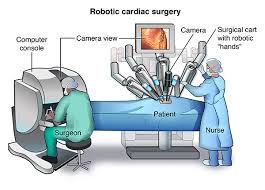
The da Vinci robot is a highly sophisticated tool that enables the surgeon to perform the procedure with greater precision and control than is possible in traditional hands-on surgery. In robotically assisted surgeries, the chest cavity is accessed through dime-size "keyhole" incisions.
The surgeon sits in a console equipped with controls that direct robotic arms to perform the surgery. The da Vinci's robotic arms are essentially an extension of the surgeon's hands. A tiny camera attached to a robotic arm gives the surgeon a very detailed, three-dimensional view of the operating space inside the chest. The robotic arms are very agile, providing the surgeon a greater range of motion than is possible with hand-manipulated moves in standard procedures


Benefits of Robotic Heart Surgery
Minimally invasive surgery offers several advantages compared to open-chest procedures, including:

• Faster return to normal activities. Rather than waiting several weeks to heal, patients can return to work or other activities much more quickly--usually within 10 days.
• Shorter hospital stay. Time spent in the hospital can sometimes be reduced by as much at 50 percent, compared to open procedures.
• No splitting of the breastbone ("cracking the chest"). Keeping the breastbone intact reduces the chance for post-surgical complications and infection.
• Smaller incisions. Depending upon the case, the operation may be performed through four to five fingertip-size incisions or through a 3- to 5-inch incision at the side of the chest. Traditional open-heart procedures require a longer incision down the center of the chest.
• Significantly less pain. Decreased damage to tissue and muscle results in less pain. Tylenol or aspirin are often enough to manage pain after some procedures.
• Elimination of the heart-lung bypass machine, in most cases. Avoiding the bypass machine decreases the risks for neurological complications and stroke.
• Minimal blood loss and less need for transfusion.
• Little scarring. Instead of a long chest scar, only a few tiny scars or a short, 3- to 5-inch scar remains.

Tuesday, 9 February 2016

Surgery for Atrial Septal Defect (ASD) in India | Best Heart Surgery Hospital India

What is Atrial Septal Defect (ASD)
Atrial Septal Asd Surgery, Atrial Septal Asd India
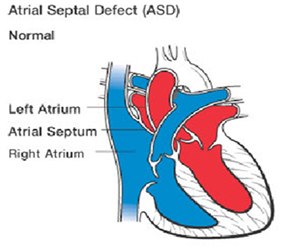
An atrial septal defect (ASD) is a hole in the wall between the two upper chambers of your heart. The condition is present from birth (congenital). Smaller atrial septal defects may close on their own during infancy or early childhood. 

Large and long-standing atrial septal defects can damage your heart and lungs. An adult who has had an undetected atrial septal defect for decades may have a shortened life span from heart failure or high blood pressure in the lungs. Surgery is usually necessary to repair atrial septal defects to prevent complications. 


Symptoms of Atrial Septal Defect (ASD)

Many babies born with atrial septal defects don't have signs or symptoms. In adults, signs or symptoms may not develop until age 30 or later. 

Your doctor may first uncover an atrial septal defect during a regular checkup while listening to your heart using a stethoscope. Hearing a heart murmur may signal a hole in your heart. Atrial septal defects are often found when an ultrasound exam of the heart (echocardiogram) is done for another reason. 

Signs and symptoms of atrial septal defects develop once damage occurs to the heart and lungs. Infants with larger atrial septal defects may have poor appetites and not grow as they should. Adults and infants may have signs of heart failure or arrhythmias. 

Signs and symptoms of large or long-standing atrial septal defects may include : -


  • Shortness of breath
  • Fatigue
  • Swelling of legs, feet or abdomen
  • Heart palpitations or skipped beats
^ Back to Top
Causes of Atrial Septal Defect (ASD)
 Atrial Septal Asd India, Atrial Septal Defect Surgery, Atrial Septal Defect
Doctors know that heart defects present at birth (congenital) arise from errors early in the heart's development, but there's often no clear cause. Genetics and environmental factors may play a role. 

An atrial septal defect allows freshly oxygenated blood to flow from the left upper chamber of the heart (left atrium) into the right upper chamber of the heart (right atrium). There it mixes with deoxygenated blood and is pumped to the lungs, even though it's already refreshed with oxygen. If the atrial septal defect is large, this extra blood volume can overfill the lungs and overwork the heart. If not treated, the right side of the heart eventually enlarges and weakens. In some cases, the blood pressure in your lungs increases as well, leading to pulmonary hypertension. 


Comparing ASD with patent foramen ovale 

The term "atrial septal defect" usually refers to holes in the atria resulting from a lack of atrial septal tissue, rather than those related to a condition called patent foramen ovale (PFO). 

Patent foramen ovale occurs when part of the normal fetal heart circulation fails to close properly at birth. During fetal heart development, a channel (the foramen ovale) is present between the atria to allow blood to bypass the lungs. At birth, once the lungs take over breathing, the hole normally closes. In about one in three people, this opening doesn't close. 


Treatments and drugs for Atrial Septal Defect (ASD) in India

If your child has an atrial septal defect, your doctor may recommend monitoring it for a period of time to see if it closes on its own, while treating any symptoms with medications. 

According to the National Institutes of Health, about half of all atrial septal defects eventually close on their own. About 20 percent close within the first year of life. If a hole hasn't closed early in childhood, it usually won't close on its own. Some small atrial septal defects don't cause any problems and may not need closure, but many require surgery to be corrected. If your child needs treatment, the timing of it depends on your child's condition and whether your child has any other congenital heart defects. 


Surgery of Atrial Septal Defect (ASD) in India

Many doctors recommend repairing an atrial septal defect diagnosed during childhood to prevent complications as an adult. For adults and children, surgery involves plugging or patching the abnormal opening between the atria. 

Doctors can do this through two methods : -


  • Cardiac catheterization : - ASD Closure. A thin tube (catheter) is inserted into a blood vessel in the groin and guided to the heart. Through the catheter, a mesh patch or plug is put into place to close the hole. The heart tissue grows around the mesh, permanently sealing the hole.

  • Open-heart surgery : - This type of surgery is done under general anesthesia and requires the use of a heart-lung machine. Through an incision in the chest, surgeons use patches or stitches to close the hole.

Follow-up care depends on the type of defect and whether other defects are present. For simple atrial septal defects closed during childhood, only occasional follow-up care is needed. For adults, follow-up care may depend on any resulting complications. 

Wednesday, 3 February 2016

Benefits of Minimally Invasive Heart Valve Surgery in India - Top Heart Hospitals in India

Heart Valve Repair or Replacement Surgery in India
Heart Valve Repair
Heart valve repair is a surgical or minimally invasive procedure that corrects a heart valve that is not functioning properly. Heart valve repair usually involves the heart valve leaflets that open and close to pump blood through the heart.
Your cardiac surgeon shall investigate and advise if repairing your heart valve is the best way to treat your heart valve disease.

Heart Valve Replacement
When valve repair shall not be of help, replacing your damaged heart valve may be the most effective treatment for your condition. Also known as Heart Valve Replacement, Aortic Valve Replacement, is a cardiac surgery procedure in which the damaged heart valve is replaced with a new valve. This valve can be a tissue valve taken from some other body, or may be of animal or an artificial or prosthetic valve.
Heart valve repair or replacement can be done for one single valve or more than one depending upon the condition of your valves.


Valve replacement Surgery procedure
The patient is put under general anaesthesia and connected to the heart lung machine. This machine takes over the pumping, circulatory, and respiratory functions of the heart and lung till the surgical procedure is going on.
The valves are accessed by cutting open the rib cage and accessing the heart directly. The old valves are sliced from their attachments and new valves are put in their place. The new valves may be obtained from a cadaveric donor, or an animal (pig) or it may be made of a nonreactive inert material.
The patient needs to be given anticoagulants or immunosuppressive to clotting of blood or rejection of organ. The prognosis of this surgery is good. It is many a time a life-saving and life extending surgery.

Types of Heart Valve Replacement:-
Open-heart valve replacement surgery It is a surgical procedure wherein the patient's heart is exposed in the operation theatre and surgery is performed on the internal structures of the heart. During the surgery, the patient is placed on a heart-lung machine that allows blood to flow through the heart while the surgery is being performed.
Minimally Invasive Heart Surgery Minimally Invasive Heart Surgery, also known as Keyhole surgery, is performed by making small incisions of about 3 to 4 inches in the heart muscle, through specialized surgical instruments. In most cases, minimally invasive heart surgery focuses on Mitral valve repair, Aortic valve repair and Tricuspid valve repair.
Valvuloplasty : It is a technique wherein the stiff aortic valves are treated with the help of a balloon catheter. The balloon is positioned in the aortic valve and subsequently inflated to expand the size of the valve, leading to improved blood flow.


Double valve repair and replacement procedure aims at correcting or replacing both these damaged valves (aortic & mitral together) with new functional valves. This is done through the open heart surgery. Triple valve replacement repair and replacement means repair or replacement of three valves of the heart.
Benefits of Minimally Invasive Valve Surgery in India
Minimally invasive mitral valve repair is performed through a two-inch keyhole incision on the side of the chest. The port access technique is a step ahead in that the incision is even smaller and the whole operation is video-directed, whereas in non-port access minimally invasive mitral valve surgery, the operation is done by direct vision. The minimally invasive approaches avoid an incision in the breastbone (sternotomy) and have several benefits like:
• Less pain
• Shorter stay in hospital. Hence, patients return to work and everyday activity sooner after surgery.
• Less bleeding
• Fewer chances of infection as the incision is smaller
• Cosmetic benefits

Tuesday, 24 November 2015

Affordable Coronary Bypass Heart Surgery (CABG) in India

Coronary bypass surgery performed in world class hospitals in India is a procedure to allow blood to flow to your heart muscle despite blocked arteries. Coronary bypass surgery uses a healthy blood vessel taken from your leg, arm, chest or abdomen and connects it to the other arteries in your heart so that blood is bypassed around the diseased or blocked area. After a coronary bypass surgery, normal blood flow is restored. Coronary bypass surgery is just one option to treat heart disease. 


Just like all the other organs in your body, your heart needs blood and oxygen to do its job. Coronary arteries snake across the surface of your heart, delivering a constant supply of blood and oxygen to the heart muscle. When one or more of these arteries become narrowed or blocked, blood and oxygen are reduced and heart muscle is damaged. Coronary bypass surgery can minimize this damage. 


Today Cardiology treatment in India has come up as a suitable option in order to get rid of any of the heart defects as the cost in India of any of the treatments is the best and that too at rates which are absolutely affordable. Because of these benefits of choosing in India, any of the treatments, many foreigners have come down here in order to solve their trouble of heart diseases.
Who Should Consider Coronary Artery Bypass Graft Surgery?
  • People diagnosed with arterial blockage or heart damage are recommended with the Coronary Artery Bypass Graft Surgery.
  • People suffering from severe chest pain or angina due to the arterial blockage are recommended with the Coronary Artery Bypass Graft Surgery.
  • People suffering from complicated conditions such as diabetes & high blood pressure are recommended the Coronary Artery Bypass Graft Surgery to reduce the risk of heart attack.

Procedure for Coronary Bypass Surgery

During a Coronary Artery Bypass Graft Surgery (CABG), the blood flow is re-routed around the clogged artery by detaching a long segment of an artery from the chest wall, arms or leg veins. Thereafter, the new artery is grafted to the clogged area of the coronary artery. Through the newly attached channel, blood gets unhindered route to flow to the heart muscles. This procedure is known as Coronary Artery Bypass Surgery. Depending upon the number of blocked coronary arteries, a patient may undergo more than one bypass graft.
What to Expect After Coronary Artery Bypass Graft Surgery?
After surgery, there will be a short stay (1 to 2 days if there are no complications) in the intensive care unit (ICU). In the ICU, you will likely have:
·         Continuous monitoring of his or her heart activity.
·         A tube to temporarily help with breathing.
·         A stomach tube, to remove stomach secretions until the person starts eating again.
·         A tube (catheter) to drain the bladder and measure urine output.
·         Tubes connected to veins in the arms (intravenous, or IV, lines) through which fluids, nutrition, and medicine can be given.
·         An arterial line to measure blood pressure.
·         Chest tubes, to drain the chest cavity of fluid and blood (which is temporary and normal) after surgery.
Benefits of Coronary Artery Bypass Graft Surgery
Some of the potential benefits of Coronary Bypass Heart Surgery (CABG) include :
  • Lower risk of stroke
  • Lower death rate
  • Less need for transfusion
  • Less heart rhythm problems
  • Less injury to the heart
FAQ's - Coronary Artery Bypass Graft Surgery in India

What is the cost of Coronary Artery Bypass Graft Surgery?
Coronary Artery Bypass Graft Surgery is amongst the lowest in the world. The Coronary Artery Bypass Graft Surgery is about 20% of the cost in the USA. The low Coronary Artery Bypass Graft Surgery is without any compromise on quality or success rate

Are cardiac surgeons in India well qualified to perform heart surgeries?
Teaching hospitals in India are of a high standard. Further, many cardiac surgeons and cardiologists from India have had further education/training abroad at top class medical schools and hospitals. The result is a very high level of academic excellence amongst cardiologists and cardiac surgeons in India.

How experienced are cardiac surgeons in India at handling complex heart surgeries?
The translation of academic excellence into outstanding medical results happens only with practice and experience. Indian doctors acquire a great amount of experience over a very short period of time because of the large number of patients requiring cardiac treatment in India.

Do surgeons perform advanced heart surgeries in India?
Cardiac surgeons in India are experts at performing advanced procedures like Heart Transplants, Robotic Cardiac Procedures, Totally Endoscopic Coronary Artery Bypass Surgery (TECAB), Minimally Invasive Direct Coronary Artery Bypass Grafting (MIDCAB), Off-Pump Coronary Artery Bypass Grafting (OPCAB), complex mitral valve repairs, etc.

What success rates can one expect in India from cardiology hospitals?
It is quite amazing that Indian hospitals are able to offer a combination of extremely low cost cardiac treatment in India along with extremely high success rates as well. In fact, leading hospitals for cardiac treatment in India have success rates in excess of 98%, which is absolutely world-class.

Get a free of cost second opinion from renowned surgeons within 24 hours.

For further information or free consultation, we request you to fill in inquiry form on the website and send medical reports to free@mymedopinion.com. MyMedOpinion assures you that all arrangements for examinations, surgeries, and post-operative recuperation will be ably taken care of you

Get the MyMedOpinion Advantage

MyMedOpinion help by its expertise and speed and quality of response. From arranging opinion from India's best cancer hospitals, hospital appointment bookings, travel and hotel accommodation, we manage our patient’s needs efficiently.
·         Quick responses… Within 24-hours
·         World class results for  treatment
·         Cancer specialists with great qualifications and experience

·         Assistance to Plan your Travel and Apply for India visa.

Friday, 6 November 2015

Pacemaker implantation Surgery in India | Cost of Pacemaker Surgery in India

Heart rhythm problems (arrhythmia) occur when the electrical impulses produced by your heart that coordinate heartbeat do not function properly, causing your heart to beat too quickly, too slowly, or irregularly. Age increases the probability of experiencing an arrhythmia. It can occur in people who do not have heart disease. Some heart arrhythmias are harmless, though some types, such as ventricular tachycardia (fast heart rates), are serious and even life threatening.

Pacemakers represent one of the earliest and most successful nonpharmacological therapy for arrhythmias. Millions of pacemakers have been implanted since the very first pacemaker was implanted. Drugs are no longer used except in the very acute setting before implantation of a temporary or permanent pacemaker.

A cardiac pacemaker is a device that is used to regulate the heart rate.
If you have been found to have a heartbeat that is too slow, a pacemaker can be implanted in the body to take over the function. This small electronic device automatically monitors and regulates the heartbeat, by transmitting electrical impulses to stimulate the heart when it is beating too slowly. A pacemaker consists of a pacing lead and a pulse generator. Single chamber pacemakers have only a single lead while dual chamber pacemakers have two leads with one lead in the atrium and the other in the ventricle. Dual chamber pacemakers are more physiological but more expensive.

Types of pacemakers

Single chamber pacemakers are pacing systems that use one lead in either the right atrium or the right ventricle of your heart.

A single lead in the right atrium is commonly used in conditions where the normal pacemaker of the heart is not working adequately, such as in the case of sick sinus syndrome. Atrial pacing is used when the sinus node is sending out signals that are too slow or irregular. However, to use this method of pacing, the rest of the heart's normal conduction system must be functioning normally.

More commonly, the single lead is placed in the right ventricle to help correct a slow or irregular heart beat. This is most often the case when the electrical flow is slowed or blocked in the region of the atrio-ventricular (A-V) node and the normal impulses from the atria cannot reach the ventricle. This would result in too slow a heart beat. The pacemaker system would keep the heart beating at a steady rate

Dual chamberpacemakers are pacemaker systems that use a lead in the right atrium as well as the right ventricle (figure 6). This type of pacing most closely mimics the heart's normal conduction pattern by pacing sequentially from atria to ventricle thus maximizing the heart's pumping ability. By having a lead in both the atria and ventricle the pulse generator is able to continuously regulate the heart's electrical activity in both chambers. These are the most commonly used pacemakers at the present time.

Commonly asked questions about pacemakers

Will I need to make any lifestyle changes after my pacemaker is implanted?
There are no significant lifestyle changes that you will need to make as a result of having a pacemaker implanted. Most patients resume their normal activities soon after implantation. Specific issues or concerns should be addressed with your pacemaker physician or nurse.
How often will I need to have my pacemaker checked?
Your pacemaker system will need to be evaluated by your pacemaker physician, nurse, or your local cardiologist's office at least twice yearly. A special computer called a programmer is used to perform a comprehensive evaluation of your pacemaker system. The programmer has a wand (like a computer mouse) that is used to communicate with the pacemaker. The wand is placed on your chest directly over the pulse generator and a radio wave signal is used to send and receive information from the pulse generator. Changes in the pacemaker settings can be done via this method as well. A complete assessment of the pacemaker's sensing and pacing functions, battery life, and diagnostic information is obtained, which enables your pacemaker physician/nurse to fine tune your care.
How is the battery changed?
The battery that is used to power your pulse generator is tightly sealed within the metal shell of the device. Therefore, when the battery's energy is depleted a whole new pulse generator must be implanted. The skin over the pulse generator site is numbed up with local anesthetic. You may also receive a light sedative through a intravenous line to help you relax. A new incision is made in the skin and the pacemaker pocket is opened. The pulse generator is removed and lead(s) disconnected. At this time the lead(s) are hooked to a special analyzer that evaluates the lead(s) for any evidence of potential malfunction. A new pulse generator is then attached to the lead(s) and the system is reimplanted in the same pocket. The incision is sutured (sewn) together and a small dressing applied. Most patients can go home the same day as their procedure.
Can I use a microwave?
Microwave ovens will not interfere with the proper functioning of your pacemaker. You can use a microwave oven without concern.
Can I use a cell phone?
It is possible that a cellular phone might interfere with the normal functioning of your pacemaker. The interaction is temporary, however, and will only affect the pacemaker during the time that your cellular phone is close to your pacemaker. To avoid this potential interference, it is recommended that you hold the cellular phone on the opposite side of your body away from the pacemaker. You should also not store your cellular phone in your breast pocket.You should always try to maintain a distance of at least 6 inches between your cellular phone and your pacemaker system.
Do I have to take any precautions at the airport?
If you were to walk through the metal detector at the airport, it will not harm you nor your pacemaker. However, because the pacemaker is encased in a metal shell, it is possible that the pacemaker may set off the security alarm. To avoid this problem, it is generally recommended that you show your pacemaker identification card to the security agent and inform him/her that you have an implanted pacemaker system. They should let you pass around the metal detector. If the airport security wants to scan you with the "hand wand", they can everywhere except over the device. This information also pertains to any metal detector such as at a courthouse or federal building.