Showing posts with label robotic heart surgery india. Show all posts

Tuesday, 5 April 2016

Robotic Heart Surgery at World Class Hospital in India

Robotic surgery for cardiac is a form of heart surgery performed through tiny incisions in the chest. The procedure is sometimes called da Vinci surgery because that is the name of the manufacturer of the robot often used for this procedure Robotic surgeries have been used for a number of different heart-related procedures, including mitral valve repair, coronary artery bypass, heart defect repair, and tumor removal.

Robotic Heart Surgery in India is the latest and most advanced technique in the world to perform heart surgery with greatest precision Robot Assisted Heart Procedures are done to treat a variety of conditions:
• Mitral valve repair—surgery to repair problems with the valve between the upper and lower chambers on the left side of the heart
• Coronary artery bypass grafting (CABG)—surgery that creates a path around blocked heart vessels so that blood can reach the heart muscle. The bypass is done using blood vessels from other parts of the body to
Atrial septal defect repair—surgery to close a hole in the wall between the upper two chambers of the heart
• Biventricular pacemaker lead placement for heart failure—surgery to place leads (wires) on the inner surface of the heart’s ventricles. The leads are attached to a biventricular pacemaker to help the heart beat in a regular rhythm.

Da Vinci Robotic system
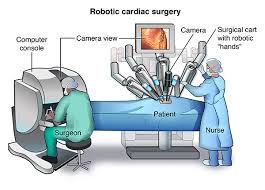
The da Vinci robot is a highly sophisticated tool that enables the surgeon to perform the procedure with greater precision and control than is possible in traditional hands-on surgery. In robotically assisted surgeries, the chest cavity is accessed through dime-size "keyhole" incisions.
The surgeon sits in a console equipped with controls that direct robotic arms to perform the surgery. The da Vinci's robotic arms are essentially an extension of the surgeon's hands. A tiny camera attached to a robotic arm gives the surgeon a very detailed, three-dimensional view of the operating space inside the chest. The robotic arms are very agile, providing the surgeon a greater range of motion than is possible with hand-manipulated moves in standard procedures


Benefits of Robotic Heart Surgery
Minimally invasive surgery offers several advantages compared to open-chest procedures, including:

• Faster return to normal activities. Rather than waiting several weeks to heal, patients can return to work or other activities much more quickly--usually within 10 days.
• Shorter hospital stay. Time spent in the hospital can sometimes be reduced by as much at 50 percent, compared to open procedures.
• No splitting of the breastbone ("cracking the chest"). Keeping the breastbone intact reduces the chance for post-surgical complications and infection.
• Smaller incisions. Depending upon the case, the operation may be performed through four to five fingertip-size incisions or through a 3- to 5-inch incision at the side of the chest. Traditional open-heart procedures require a longer incision down the center of the chest.
• Significantly less pain. Decreased damage to tissue and muscle results in less pain. Tylenol or aspirin are often enough to manage pain after some procedures.
• Elimination of the heart-lung bypass machine, in most cases. Avoiding the bypass machine decreases the risks for neurological complications and stroke.
• Minimal blood loss and less need for transfusion.
• Little scarring. Instead of a long chest scar, only a few tiny scars or a short, 3- to 5-inch scar remains.

Tuesday, 24 November 2015

Affordable Coronary Bypass Heart Surgery (CABG) in India

Coronary bypass surgery performed in world class hospitals in India is a procedure to allow blood to flow to your heart muscle despite blocked arteries. Coronary bypass surgery uses a healthy blood vessel taken from your leg, arm, chest or abdomen and connects it to the other arteries in your heart so that blood is bypassed around the diseased or blocked area. After a coronary bypass surgery, normal blood flow is restored. Coronary bypass surgery is just one option to treat heart disease. 


Just like all the other organs in your body, your heart needs blood and oxygen to do its job. Coronary arteries snake across the surface of your heart, delivering a constant supply of blood and oxygen to the heart muscle. When one or more of these arteries become narrowed or blocked, blood and oxygen are reduced and heart muscle is damaged. Coronary bypass surgery can minimize this damage. 


Today Cardiology treatment in India has come up as a suitable option in order to get rid of any of the heart defects as the cost in India of any of the treatments is the best and that too at rates which are absolutely affordable. Because of these benefits of choosing in India, any of the treatments, many foreigners have come down here in order to solve their trouble of heart diseases.
Who Should Consider Coronary Artery Bypass Graft Surgery?
  • People diagnosed with arterial blockage or heart damage are recommended with the Coronary Artery Bypass Graft Surgery.
  • People suffering from severe chest pain or angina due to the arterial blockage are recommended with the Coronary Artery Bypass Graft Surgery.
  • People suffering from complicated conditions such as diabetes & high blood pressure are recommended the Coronary Artery Bypass Graft Surgery to reduce the risk of heart attack.

Procedure for Coronary Bypass Surgery

During a Coronary Artery Bypass Graft Surgery (CABG), the blood flow is re-routed around the clogged artery by detaching a long segment of an artery from the chest wall, arms or leg veins. Thereafter, the new artery is grafted to the clogged area of the coronary artery. Through the newly attached channel, blood gets unhindered route to flow to the heart muscles. This procedure is known as Coronary Artery Bypass Surgery. Depending upon the number of blocked coronary arteries, a patient may undergo more than one bypass graft.
What to Expect After Coronary Artery Bypass Graft Surgery?
After surgery, there will be a short stay (1 to 2 days if there are no complications) in the intensive care unit (ICU). In the ICU, you will likely have:
·         Continuous monitoring of his or her heart activity.
·         A tube to temporarily help with breathing.
·         A stomach tube, to remove stomach secretions until the person starts eating again.
·         A tube (catheter) to drain the bladder and measure urine output.
·         Tubes connected to veins in the arms (intravenous, or IV, lines) through which fluids, nutrition, and medicine can be given.
·         An arterial line to measure blood pressure.
·         Chest tubes, to drain the chest cavity of fluid and blood (which is temporary and normal) after surgery.
Benefits of Coronary Artery Bypass Graft Surgery
Some of the potential benefits of Coronary Bypass Heart Surgery (CABG) include :
  • Lower risk of stroke
  • Lower death rate
  • Less need for transfusion
  • Less heart rhythm problems
  • Less injury to the heart
FAQ's - Coronary Artery Bypass Graft Surgery in India

What is the cost of Coronary Artery Bypass Graft Surgery?
Coronary Artery Bypass Graft Surgery is amongst the lowest in the world. The Coronary Artery Bypass Graft Surgery is about 20% of the cost in the USA. The low Coronary Artery Bypass Graft Surgery is without any compromise on quality or success rate

Are cardiac surgeons in India well qualified to perform heart surgeries?
Teaching hospitals in India are of a high standard. Further, many cardiac surgeons and cardiologists from India have had further education/training abroad at top class medical schools and hospitals. The result is a very high level of academic excellence amongst cardiologists and cardiac surgeons in India.

How experienced are cardiac surgeons in India at handling complex heart surgeries?
The translation of academic excellence into outstanding medical results happens only with practice and experience. Indian doctors acquire a great amount of experience over a very short period of time because of the large number of patients requiring cardiac treatment in India.

Do surgeons perform advanced heart surgeries in India?
Cardiac surgeons in India are experts at performing advanced procedures like Heart Transplants, Robotic Cardiac Procedures, Totally Endoscopic Coronary Artery Bypass Surgery (TECAB), Minimally Invasive Direct Coronary Artery Bypass Grafting (MIDCAB), Off-Pump Coronary Artery Bypass Grafting (OPCAB), complex mitral valve repairs, etc.

What success rates can one expect in India from cardiology hospitals?
It is quite amazing that Indian hospitals are able to offer a combination of extremely low cost cardiac treatment in India along with extremely high success rates as well. In fact, leading hospitals for cardiac treatment in India have success rates in excess of 98%, which is absolutely world-class.

Get a free of cost second opinion from renowned surgeons within 24 hours.

For further information or free consultation, we request you to fill in inquiry form on the website and send medical reports to free@mymedopinion.com. MyMedOpinion assures you that all arrangements for examinations, surgeries, and post-operative recuperation will be ably taken care of you

Get the MyMedOpinion Advantage

MyMedOpinion help by its expertise and speed and quality of response. From arranging opinion from India's best cancer hospitals, hospital appointment bookings, travel and hotel accommodation, we manage our patient’s needs efficiently.
·         Quick responses… Within 24-hours
·         World class results for  treatment
·         Cancer specialists with great qualifications and experience

·         Assistance to Plan your Travel and Apply for India visa.

Sunday, 25 October 2015

Cardiac Surgery at World Best Hospitals in India

Robotic Heart Surgery in India 

Popularly known as the Bypass Surgery, Cardiac bypass implanting a healthy or working blood vessel from any other part of the body to bypass the blocked vessel. The heart surgeons in India are highly experienced to perform a CABG or heart bypass surgery. India offers great value proposition to patients looking for affordable Heart surgery or Cardiac surgery abroad as not only the cost of cardiac bypass surgery in India is very low, the facilities and infrastructure is most modern and is counted among the best heart hospitals in the world. 


The blockages in the arteries grow with the deposition of fat. This process is called as Artherosclerosis. These blockages obstruct the free flow of the blood to the various parts of the heart leading to severe chest pain (known as angina) or a heart attack in the later stages.Today Cardiology treatment in India has come up as a suitable option in order to get rid of any of the heart defects as the cost in India of any of the treatments is the best and that too at rates which are absolutely affordable. Because of these benefits of choosing in India, any of the treatments, many foreigners have come down here in order to solve their trouble of heart diseases. 


When repair is not an option, replacing your damaged heart valve may be the most effective treatment for your condition. Also known as Heart Valve Replacement, Aortic Valve Replacement, is a cardiac surgery procedure in:-


  • Ring Annuloplasty - In this procedure the surgeon repairs the ring-like part around the valve by stitching a ring of metal, cloth, or tissue around the valve.
  • Valve repair - In this one or more leaflets of the valve is trimmed, shaped, or rebuild. The leaflets are the flaps that are responsible for opening and closing of the valve.


Pediatric Cardiothoracic Surgery 
Pediatric cardiothoracic Surgery is a kind of heart surgery that is performed children for repairing heart defects which occur at the time of birth which are known as congenital heart diseases. Pediatric Cardiac Surgery is necessary for the well-being of the child.
This surgery is done to take care of various diseases in children such as Artrial Septal Defect (ASD), Patent Ductus Arteriosus and Total correction or Four Abnormality correction (TOF). 

Heart Surgery Procedures performed with Excellent Outcomes:-

  • CABG - Minimally Invasive Valve & Coronary Heart Bypass Techniques.
  • Off-pump Coronary Artery Bypass (OPCAB)
  • Mitral & Aortic Valve repair & restoration surgery
  • Aortic dissection surgery
  • Transmyocardial laser revascularization
  • Congenital and Pediatric heart surgery
  • Heart failure surgery- Ventricular restoration and Ventricular assist Devices
  • Carotid endarterectomy
  • Peripheral vascular procedures
  • Atrial Fibrillation & Arrhythmia surgery 


The most advanced technology for minimally invasive heart surgery is now available in India. Robotic da Vinci Surgical System combines superior 3D visualization along with greatly enhanced dexterity, precision and control in an intuitive, ergonomic interface with breakthrough surgical capabilities.In Robotic Cardiac Surgery, robotic assist the heart surgeon in performing surgery through tiny incisions. The surgeon has to sit in an operating room where he controls the instruments while looking at 3D images from the camera which is inside the patient. Various procedures can be performed in this case such as mitral valve replacement or repair, correction of HOCM etc. Use of Robotic Surgery in Cardiology has benefits as it involves less pain, scarring and risk that are otherwise involved. The surgeon can perform surgery through tiny openings in the chest, cracking the breastbone and spreading the ribs. 

Minimally Invasive Surgery
Much modern cardiothoracic surgery is performed with the help of highly advanced machines that are operated externally by a surgeon. The main advantage to these machines is that they can operate through very small incisions, and this dramatically shortens the recovery time of a patient. The most advanced machines are even able to react intelligently to changes in the patient’s body. For instance, some machines can adapt to the beating of a heart, moving their arms in synch with it, so that to the surgeon operating the machine it appears as if the heart is stationary.

Robot Heart Surgery Hospital in India


In addition to avoiding the pain and trauma of sternotomy and rib spreading, robotic mitral valve repair may provide patients with the following benefits over open surgery:
  • Less risk of infection
  • Less blood loss and need for blood transfusions
  • Shorter hospital stay
  • Significantly less pain and scarring
  • Faster recovery
  • Quicker return to normal activities
  • And a potentially better clinical outcome|
What is the Mitral Valve?

What is Mitral Valve Prolapse?Mitral Valve Prolapse Treatment OptionsValve Replacement  - In valve replacement, your surgeon cuts out the damaged valve and replaces it with a new, artificial valve.Valve Repair  - Valve repair involves the surgeon reconstructing your valve using your own tissues.
  • Stenosis (narrowing) of the mitral valve
  • Regurgitation (leakage) of the mitral valve
  • Blockages in the heart's arteries
  • Severe chest pain ( angina ) that has not improved with medicines
                 Please note that not all patients are candidates for robotic surgery. Your surgeon will provide you with the most appropriate treatment option after thoroughly assessing your condition.

The mitral valve controls blood flow through the left side of the heart. When it opens, the mitral valve allows blood to flow into the left ventricle, the heart’s main pumping chamber. When the left ventricle contracts, the mitral valve closes in order to prevent blood from flowing back toward the lungs.

Sometimes the mitral valve is abnormal from birth. It can also become damaged by infection, with age or from heart disease.

If the mitral valve leaflets cannot tightly seal the left ventricle, this is called prolapse. With mitral valve prolapse, some blood flows back into the atrium – a condition called regurgitation. Regurgitation can make the heart work harder, leading to further valve damage and increasing the risk of heart failure.

The treatment options available to a person with mitral valve prolapse depend on the severity of your condition. Some patients may not require any intervention. Others may be prescribed medications. However, if your symptoms become severe, your doctor may recommend mitral valve prolapse surgery. There are two basic types of valve prolapse surgery:
Robot Assisted Heart Procedures are done to treat a variety of conditions:
1. Robot Assisted Mitral Valve Repair may be used to treat:2. Robot Assisted Coronary Artery Bypass Grafting (CABG) may be used to treat3. Robot-assisted Atrial Septal defect repair may be used to treat a hole between the upper chambers of the heart that does not close properly during foetal development.
4. Robot-assisted Biventricular Pacemaker lead placement may be used to treat heart failure due to Atrial Fibrillation (irregular heart rhythm in the upper chambers of the heart)

Wednesday, 14 October 2015

Heart Angioplasty and Stent Surgery Hospital in India

Am I a candidate for Angioplasty and Stenting?

You may be a candidate for angioplasty and stenting if you have moderate to severe narrowing or blockage in one or more of your blood vessels. Usually, you will also have symptoms of artery disease, such as pain or ulceration, in one of your limbs.
If you have extremely hard plaque deposits, blockages that contain blood clots or a large amount of calcium, extensive or particularly long blockages, blood vessel spasms that don't go away, or complete blockages that cannot be crossed with the catheter, you probably are not a good candidate for angioplasty.

Am I at risk for complications during Angioplasty and Stenting?
Complications to angioplasty and stenting may include reactions to the contrast dye, weakening of the artery wall, bleeding at the access puncture site in the vessel or the angioplasty site, re-blocking of the treated artery, and kidney problems. Additionally, blockages can develop in the arteries downstream from the plaque if plaque particles break free during the angioplasty procedure. If severe, these can lead to worsening of the blood flow.
If you have diabetes or kidney disease, you may have a higher risk of complications from the contrast dye, such as kidney failure. In the case of kidney disease, sometimes pre-treatment with medications or fluids may decrease the impact on your kidneys.
People with blood clotting disorders also may have a higher risk of complications from the procedure. If the plaque deposits in your arteries are especially long, you may have a greater chance of your artery closing up again after angioplasty and stenting.

What can I expect after Angioplasty and Stenting?
Usually, you will stay in bed for six hours after your angioplasty. During this time, your vascular surgeon and the hospital staff closely monitor you for any complications. If your physician inserted the catheters through an artery in your groin, you may have to hold your leg straight for several hours. Similarly, if your arm was used, then you will need to hold it still to minimize the risk of bleeding.
If you notice any unusual symptoms after your procedure, you should tell your vascular surgeon immediately. These symptoms include leg pain that lingers or gets worse, a fever, shortness of breath, an arm or a leg that turns blue or feels cold, and problems around your access site, such as bleeding, swelling, pain, or numbness.
After you return home, your vascular surgeon will give you instructions about everyday tasks. For example, you should not lift more than about 10 pounds for the first few days after your procedure. You should drink plenty of water for 2 days to help flush the contrast dye out of your body. You can usually shower 24 hours after your procedure, but you should avoid baths for a few days.
Your physician may prescribe aspirin or other medications that thin your blood. These medications will help prevent clots from forming on your stent. Your physician may also ask you to follow an easy exercise program, like walking.
You will be asked to schedule a time to see your physician after the procedure. At this appointment, your physician may check your blood to make sure your medications are at the right dosage. He or she may also use tests to see how blood is flowing through your treated artery.

Are there any complications?
Serious complications are unusual following angioplasty and stenting but, nevertheless, can occur.
Less serious complications include bleeding or bruising where your vascular surgeon inserted the catheters. Sometimes, the hole created by the catheter does not completely close. This can create a false channel of blood flow. Rarely, an abnormal connection can form between an artery and a vein at the place where the catheter was inserted. These problems usually go away. However, if you have any serious symptoms, your vascular surgeon can treat you.
You may have an increased risk for blood clots forming along your stent, especially in the first month after your procedure. To reduce this risk, your physician may prescribe medications that thin your blood.

As more time passes after your angioplasty and stenting, restenosis becomes more likely. Stents, especially drug-coated stents, may reduce this risk. However, in some cases, you may need a repeat angioplasty or a bypass surgery if a restenosis develops.

For more information visit:         http://www.mymedopinion.com   
                  
Please scan and email your medical reports  to us at free@mymedopinion.com and we shall get you a Free Medical Opinion from India’s Best Doctors.

About MyMedOpinion.com

MyMedOpinion affiliated  Best hospitals in India provide an medical opinion from experienced surgeons and the treatment cost includes companion stay  , surgeon fee, medicines and consumables, nursing care, patient's food and airport pick up & drop etc. etc. We offer free, no obligation assistance to international patients to find world class medical treatment in India. We offer support and services to facilitate the care you require. We can help you find the best hospital in India

Send us a Medical Report to Get FREE Medical Opinion from India's Top Doctors

MyMedOpinion.com  is the hub of Surgeons and specialists for major diseases. We give you a chance to speak to our doctors and discuss your health issues directly. 
Email Us: Free@mymedopinion.com  Call Us: +91-7503537224


Congenital Heart Defects Treatment - Best Pediatric Cardiac Surgery Hospital in India


Coarctation of the aorta is a birth defect in which a part of the aorta is narrower than usual.If the narrowing is severe enough and if it is not diagnosed, the baby may have serious problems and may need surgery or other procedures soon after birth. For this reason, coarctation of the aorta is often considered a critical congenital heart defect. The defect occurs when a baby’s aorta does not form correctly as the baby grows and develops during pregnancy. The narrowing of the aorta usually happens in the part of the blood vessel just after the arteries branch off to take blood to the head and arms, near the ductus arteriosus, although sometimes the narrowing occurs before or after the ductus arteriosus. In some babies with coarctation, it is thought that some tissue from the wall of ductus arteriosus blends into the tissue of the aorta. When the tissue tightens and allows the ductus arteriosus to close normally after birth, this extra tissue may also tighten and narrow the aorta.The narrowing, or coarctation, blocks normal blood flow to the body. This can back up flow into the left ventricle of the heart, making the muscles in this ventricle work harder to get blood out of the heart. Since the narrowing of the aorta is usually located after arteries branch to the upper body, coarctation in this region can lead to normal or high blood pressure and pulsing of blood in the head and arms and low blood pressure and weak pulses in the legs and lower body.If the condition is very severe, enough blood may not be able to get through to the lower body. The extra work on the heart can cause the walls of the heart to become thicker in order to pump harder. This eventually weakens the heart muscle. If the aorta is not widened, the heart may weaken enough that it leads to heart failure. Coarctation of the aorta often occurs with other congenital heart defects.Causes and Risk FactorsThe causes of heart defects, including coarctation of the aorta, among most babies are unknown. Some babies have heart defects because of changes in their genes or chromosomes. Heart defects, like coarctation of the aorta, are also thought to be caused by a combination of genes and other risk factors, such as things the mother comes in contact with in the environment, what the mother eats or drinks, or medicines the mother uses.DiagnosisCoarctation of the aorta is usually diagnosed after the baby is born. How early in life the defect is diagnosed usually depends on how mild or severe the symptoms are.  Those with severe narrowing will have symptoms early in life, while babies with mild narrowing may never have problems, or signs may not be detected until later in life.In babies with a more serious condition, early signs usually include:
  • pale skin
  • irritability
  • heavy sweating
  • difficulty breathing
Detection of the defect is often made during a physical exam. In infants and older individuals, the pulse will be noticeably weaker in the legs or groin than it is in the arms or neck, and a heart murmur—an abnormal whooshing sound caused by disrupted blood flow—may be heard through a doctor’s stethoscope. Older children and adults with coarctation of the aorta often have high blood pressure in the arms.Once suspected, an echocardiogram is the most commonly used test to confirm the diagnosis. An echocardiogram is an ultrasound of the heart that can show problems with the structure of the heart and the blood flow through it, and how well the heart is working. It will show the location and severity of the coarctation and whether any other heart defects are present. Other tests to measure the function of the heart may be used including chest x-ray,electrocardiogram (EKG)magnetic resonance imaging (MRI), and cardiac catheterization.Coarctation of the aorta is often considered a critical congenital heart defect (CCHD) because if the narrowing is severe enough and it is not diagnosed, the baby may have serious problems soon after birth. CCHDs also can be detected with newborn pulse oximetry screening. Pulse oximetry is a simple bedside test to determine the amount of oxygen in a baby’s blood. Low levels of oxygen in the blood can be a sign of a CCHD. Newborn screening using pulse oximetry can identify some infants with a CCHD, like coarctation of the aorta, before they show any symptoms.

Treatment in India


No matter what age the defect is diagnosed, the narrow aorta will need to be widened once symptoms are present. This can be done with surgery or a procedure called balloon angioplasty. A balloon angioplasty is a procedure that uses a thin, flexible tube, called a catheter, which is inserted into a blood vessel and directed to the aorta. When the catheter reaches the narrow area of the aorta, a balloon at the tip is inflated to expand the blood vessel. Sometimes a mesh-covered tube (stent) is inserted to keep the vessel open. The stent is used more often to initially widen the aorta or re-widen it if the aorta narrows again after surgery has been performed. During surgery to correct a coarctation, the narrow portion is removed and the aorta is reconstructed or patched to allow blood to flow normally through the aorta.Even after surgery, children with a coarctation of the aorta often have high blood pressure that is treated with medicine. It is important for children and adults with coarctation of the aorta to follow up regularly with a cardiologist (a heart doctor) to monitor their progress and check for other health conditions that might develop as they get older.

For more information visit:         http://www.mymedopinion.com   
                  
Please scan and email your medical reports  to us at free@mymedopinion.com and we shall get you a Free Medical Opinion from India’s Best Doctors.

About MyMedOpinion.com

MyMedOpinion affiliated  Best hospitals in India provide an medical opinion from experienced surgeons and the treatment cost includes companion stay  , surgeon fee, medicines and consumables, nursing care, patient's food and airport pick up & drop etc. etc. We offer free, no obligation assistance to international patients to find world class medical treatment in India. We offer support and services to facilitate the care you require. We can help you find the best hospital in India

Send us a Medical Report to Get FREE Medical Opinion from India's Top Doctors

MyMedOpinion.com  is the hub of Surgeons and specialists for major diseases. We give you a chance to speak to our doctors and discuss your health issues directly. 
Email Us: Free@mymedopinion.com  Call Us: +91-7503537224

Thursday, 8 October 2015

Robotic Heart Surgery in India

Robot Assisted Heart Procedures in India


In addition to avoiding the pain and trauma of sternotomy and rib spreading, robotic mitral valve repair may provide patients with the following benefits over open surgery:
  • Less risk of infection
  • Less blood loss and need for blood transfusions
  • Shorter hospital stay
  • Significantly less pain and scarring
  • Faster recovery
  • Quicker return to normal activities
  • And a potentially better clinical outcome

Valve Replacement  - In valve replacement, your surgeon cuts out the damaged valve and replaces it with a new, artificial valve.Valve Repair  - Valve repair involves the surgeon reconstructing your valve using your own tissues.
  • Stenosis (narrowing) of the mitral valve
  • Regurgitation (leakage) of the mitral valve
  • Blockages in the heart's arteries
  • Severe chest pain ( angina ) that has not improved with medicines
                 Please note that not all patients are candidates for robotic surgery. Your surgeon will provide you with the most appropriate treatment option after thoroughly assessing your condition.

The mitral valve controls blood flow through the left side of the heart. When it opens, the mitral valve allows blood to flow into the left ventricle, the heart’s main pumping chamber. When the left ventricle contracts, the mitral valve closes in order to prevent blood from flowing back toward the lungs.

Sometimes the mitral valve is abnormal from birth. It can also become damaged by infection, with age or from heart disease.

If the mitral valve leaflets cannot tightly seal the left ventricle, this is called prolapse. With mitral valve prolapse, some blood flows back into the atrium – a condition called regurgitation. Regurgitation can make the heart work harder, leading to further valve damage and increasing the risk of heart failure.

The treatment options available to a person with mitral valve prolapse depend on the severity of your condition. Some patients may not require any intervention. Others may be prescribed medications. However, if your symptoms become severe, your doctor may recommend mitral valve prolapse surgery. 
Robot Assisted Heart Procedures are done to treat a variety of conditions:
1. Robot Assisted Mitral Valve Repair may be used to treat2. Robot Assisted Coronary Artery Bypass Grafting (CABG) may be used to treat3. Robot-assisted Atrial Septal defect repair may be used to treat a hole between the upper chambers of the heart that does not close properly during foetal development.4. Robot-assisted Biventricular Pacemaker lead placement may be used to treat heart failure due to Atrial Fibrillation (irregular heart rhythm in the upper chambers of the heart)

About MyMedOpinion.com

MyMedOpinion affiliated  Best hospitals in India provide an medical opinion from experienced surgeons and the treatment cost includes companion stay  , surgeon fee, medicines and consumables, nursing care, patient's food and airport pick up & drop etc. etc. We offer free, no obligation assistance to international patients to find world class medical treatment in India. We offer support and services to facilitate the care you require. We can help you find the best hospital in India

Send us a Medical Report to Get FREE Medical Opinion from India's Top Doctors

MyMedOpinion.com  is the hub of Surgeons and specialists for major diseases. We give you a chance to speak to our doctors and discuss your health issues directly. 
Email Us: Free@mymedopinion.com  Call Us: +91-7503537224